If you’re running a medium-sized, growing UK business, the maths on expense management software is different to a corporate finance team’s. You don’t have five people to spend a week configuring approval chains, and you don’t want to pay for modules built for a 500-person head office.
What you need is something that gets set up fast, doesn’t punish you as you hire, and stops you chasing receipts through email threads.
This guide compares the expense management tools most commonly recommended for UK SMEs, based on pricing model, setup time, and how well they handle the basics: submitting a claim, approving it, and getting the money back to the employee.
What to look for in expense management software
Larger businesses can absorb a clunky rollout. SMEs can’t. Here’s what actually matters at your size:
Fast setup
You should be live in weeks, not months. If a vendor’s sales team starts sketching out a long implementation project for a 50-person company, that’s a red flag.
On the flip side, be wary of any platform that claims you can ‘implement in seconds’. This approach might leave you struggling without proper training. There’s a balance. A somewhat bespoke implementation process ensures the system works for your specific needs (without taking months).
Check what “active user” actually means
The term varies between vendors, and it’s not the same as per-seat pricing, where you pay for every named user whether they log in or not.
Webexpenses, for example, counts anyone who submits or approves an expense as an active user, and prices against an agreed baseline number of those users, with overage charged only when you exceed it in a busy period.
That’s preferable for most SMEs because you’re not paying full price for dormant accounts the way you would under per-seat pricing, while still having a fixed floor cost to budget against from day one. Before comparing quotes, ask exactly what counts as active and whether a baseline or minimum commitment applies.
We go into more detail on B2B SaaS pricing models here.
Mobile-first submission
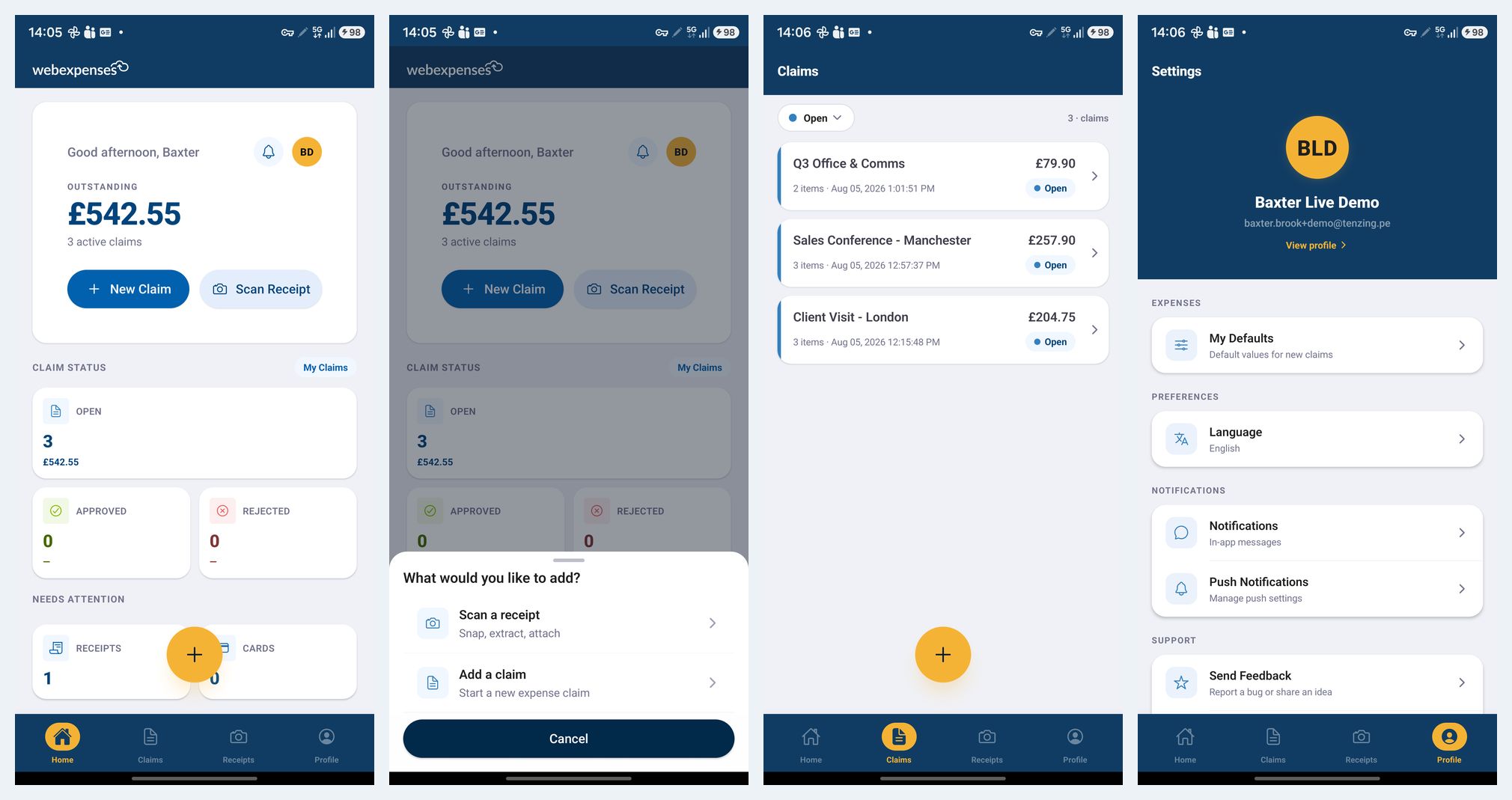
Your team is claiming expenses from a phone in a taxi or a café, not sitting at a desk. The mobile app needs to work properly, not feel like an afterthought.
Simple, not simplistic, approvals
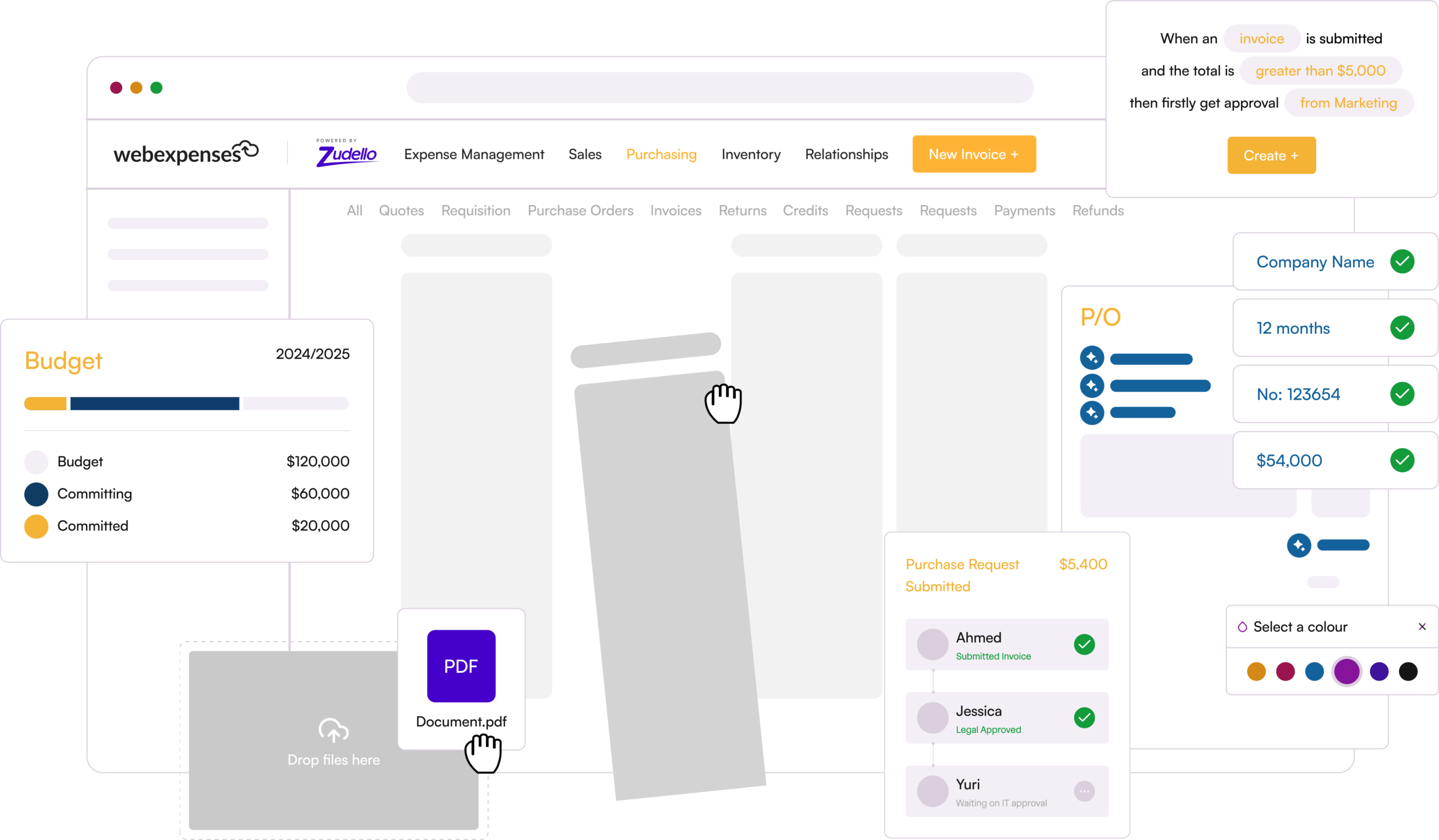
You need at least one approval step with visibility for finance, but you don’t need the multi-layered sign-off chains built for enterprise hierarchies. That doesn’t mean giving up control where it matters.
Webexpenses, for example, lets you set up multi-level approvals or define auto-approvals for low-risk claims, alongside mileage rates that align automatically to HMRC’s recommended rates, including the Advisory Fuel Rate model for company cars.
Support with real people you can speak to
Something that we can’t take for granted these days: actual human beings. When something breaks, you need a real answer quickly. AI chatbots have their place (they’re great for triaging simple queries). But admins in particular should be able to access human support promptly.
The top expense management software for 2026
1. Webexpenses
Webexpenses runs on active-user pricing, so you’re not paying for staff who don’t submit or approve claims that month.
Receipts don’t need manual categorising every time, either. Our auto-categorisation reads the text on an uploaded receipt to create a clean digital copy, compares it against your past receipts to find matching patterns, then suggests a category based on those matches, autofilling when confidence is high or prompting you to check when it isn’t.
Every validation feeds back into the system, so matches get tighter and faster over time for everyone on the platform.
Support is UK and Australia-based, with admins defaulting to a human, whether that’s the UK team during the day or the APAC team overnight. WADE, an AI agent, handles simple triage for regular users (but they can speak to our human support team, too).
Admins (e.g. the finance team) will default to human support. If you’re an admin, WADE will only step in during the brief gap between the two teams’ working hours (such as over a weekend), with a person picking up as soon as possible after.
Carbon tracking is included free, which is increasingly relevant given how UK reporting requirements are shifting.
Implementation is guided rather than instant, which means slightly longer than “seconds” but a system that’s actually configured to fit how your team works, rather than something you have to bend around.
We offer our own prepaid Expense Cards, with up to 0.75% cashback (uncapped and unlimited). These are native to our system and free for our users. You don’t have to use them, however. We remain compatible with third-party cards and we still facilitate finance teams that prefer traditional reimbursement to carry on as normal.
AP automation is covered too, with invoice matching and approval workflows handled alongside your expenses, so it’s not something you need a separate tool for.
2. SAP Concur
It’s worth addressing directly: some growing businesses assume that outgrowing a basic tool means jumping straight to SAP Concur. It’s the biggest name in the category, so it feels like the safe, grown-up choice.
SAP Concur is genuinely comprehensive, covering travel, expenses and invoicing with over 200 integrations, tax assurance and VAT validation. But that scope comes with an enterprise cost structure:
- Licensing, implementation and support charges that add up quickly.
- An onboarding process that often runs several months
- An interface that’s frequently described as clunky, needing multiple clicks for single transactions.
And at roughly £9 per claim, costs escalate fast, and its TrustPilot reviews sit at 1.7 (out of five).
For most SMEs and mid-sized businesses, that’s a lot of system to take on before you actually need it. SAP Concur tends to make sense once you have the headcount, dedicated finance resource and cross-border complexity to justify it, not simply because you’ve grown past your first expense tool.
3. Pleo
Pleo pairs prepaid company cards with expense tracking, which appeals if you want to control spend before it happens rather than reimburse after the fact. It’s particularly strong in the Nordics and has invested heavily in brand awareness.
The trade-off for an SME: you pay per card regardless of whether it’s used that month, funds can take three to eight days to load, and transactions post straight to Xero without a manager reviewing them first. If oversight matters to you, that lack of an audit trail before posting is worth weighing carefully.
4. Payhawk
Payhawk’s small business pricing starts at £149 per month for cards only, positioning it more towards the top end of what most SMEs would call an entry-level tool. It groups users into fixed departmental structures, which can feel rigid if you’re an SME without formal departments yet.
Its mobile app requires expenses to be submitted one at a time rather than in a batch, which is manageable for occasional claimants but slower if your team travels often.
5. Expensify
Expensify offers a low entry price, starting at £8 per user on its Collect tier, and integrates with QuickBooks, Xero and NetSuite. For a very small, cost-sensitive team, that price point is hard to ignore.
It’s a US-built product with a small UK team, no UK corporate card offering, and support only available through web chat rather than phone. Its “implement in seconds” pitch also means you get limited guidance on setup, which can leave gaps if your approval process is more than one step.
6. Navan
Navan bundles travel management with expense tracking into a single platform. There’s limited independent detail available on how it performs specifically for SMEs, but the general trade-off with all-in-one platforms applies here: if you need tight control over approvals and categorisation, a focused expense tool usually outperforms one that’s also trying to handle travel booking.
7. Tipalti
Tipalti focuses on compliance and payment control. There isn’t enough public detail on its feature set or pricing to say confidently how well it fits an SME budget or workflow, so it’s worth asking for a detailed quote and speaking to reference customers your size before committing.
8. Ramp
Ramp has entered the UK market with automation and spend analytics as its main pitch. As a US-founded provider still establishing itself here, it’s worth checking directly whether its compliance features and accounting integrations are genuinely built for UK requirements, rather than adapted from its US product.
9. ExpenseIn
ExpenseIn also uses active-user pricing, with approvers and finance users free. It offers auto-categorisation from scanned receipts and direct integration with AccountsIQ and QuickBooks, which suits SMEs already on one of those platforms.
It has fewer reviews on G2, Capterra and TrustRadius than more established providers, including no reviews at all on TrustRadius. Since ExpenseIn’s acquisition by AccountsIQ, it’s worth checking whether ongoing development still serves businesses outside that accounting ecosystem.
Making the right choice for your organisation
Here’s another trite observation: The best expense management system for your mid-market business depends on your specific priorities.
If you need comprehensive spend control with prepaid cards, providers like Pleo might appeal. If you’re looking for a solution that’s part of a larger ERP ecosystem, options like Concur could fit.
However, if you want a smart expense management platform built by people who understand UK and APAC businesses, backed by over 25 years of market know-how, and supported by a team that knows your name (not just your account number), that’s where we excel.
Our platform gives you faster reimbursements, in-house carbon tracking, customisable approval workflows, and an implementation process that ensures you’re set up for success from day one. We don’t lock you into paying for cards you don’t use, we don’t hide features behind premium tiers, and we don’t disappear after implementation.
Quick comparison: expense management software at a glance
If you’ve made it this far and your head’s spinning a bit, we get it. Here’s everything we’ve covered in one place:
| Provider | Best for | Pricing model | UK support | Carbon tracking | Implementation time | Key limitation |
| Webexpenses | UK SMEs (specifically medium-sized or mid-market SMEs) | Active user, agreed baseline | UK & APAC, human-first | Included free | Weeks | None worth mentioning |
| ExpenseIn | AccountsIQ users | Active user | UK hours | Enterprise tier only | Not specified | Limited reviews |
| SAP Concur | Large enterprises | Pricing varies, contact for quote | Mixed reviews | Available | Several months | Complex, costly |
| Pleo | Card-focused businesses | Per user + per card | UK hours | Not specified | Quick | Card loading delays |
| Payhawk | Upper mid-market | From £149/month | Multi-lingual | Cards only | Not specified | Rigid structure |
| Expensify | US-based companies | From £8/user | Web chat only | Not specified | Seconds (claimed) | US-centric |
| Navan | Travel-heavy orgs | Not specified | Not specified | Not specified | Not specified | Less control |
| Tipalti | Specific use cases | Not specified | Not specified | Not specified | Not specified | Limited info |
| Ramp | Cost analytics focus | Not specified | Not specified | Not specified | Not specified | New to UK |
Ready to see how Webexpenses compares to your current process? Book a demo with our team and we’ll show you exactly how we can streamline your expense management.