Why is expense fraud so devilishly prevalent?
Exaggerated costs, falsified journeys and wildly off-policy claims – employee expense reports can be spine-chilling reading for finance professionals.
Expense fraud is a major problem, one that contributes to the $2.9 trillion annual business losses that are suffered globally each year as a result of fraudulent activities.
Our latest research shines a light on exactly what’s driving the problem – highlighting the workplace battle that’s taking place between employees’ inner expense ‘angels’ and ‘devils’.
It’s a battle that’s currently being won by the pitchfork wielders. Surveying more than 4,000 office workers across the globe, 47% admitted to having falsified or exaggerated their expense reimbursements.
The reasons they gave provide valuable insight into the root causes of expense fraud and some effective strategies that can be used to tackle the issue. The main ‘devils’ revealed were:
‘Everyone does it’
Just under a quarter of respondents (24%) used the fact that expense fraud was so commonplace within their workplace as a justification.
Poor management and monitoring of expenses
Nearly nine-out-ten employees (84%) said they had never had an expense report challenged or rejected. Over a third (37%) said a ‘sensible’ fraudulent claim would never be detected.
Unofficial ‘bonus’ system
Using dodgy reimbursement claims as a way to ‘right’ perceived wrongs – such as low pay and long hours – was given as a justification by 39% of expense fraudsters.
The research demonstrates the powerful impact that workplace culture has on employee decision making. For too many businesses, expense fraud has become dangerously normalized.
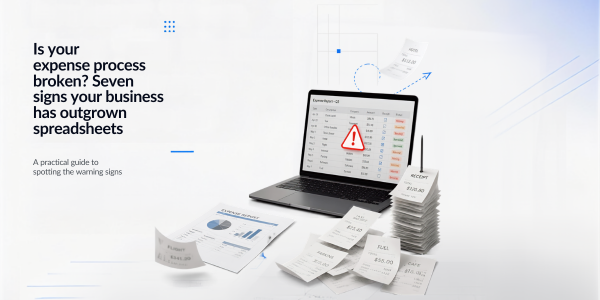
This is largely as a consequence of finance teams not having the tools they need to effectively manage and monitor reimbursement costs. It’s a task that’s typically still handled manually, with Excel spreadsheets and bundles of paper receipts.
The report looks at how switching to an automated system such as Webexpenses can transform attitudes towards expense fraud. With real-time policy checks and alerts, it allows a finance team to start effectively policing claims.
It provides an effective way to shield a company against ‘scary’ expenses and to start creating a workplace environment in which employees’ inner ‘devils’ are driven away.