- The problem with business expense claims
- A fraudulent expense claim
- Failure to manage business expense claims
- A smarter way to fight expense fraud
The problem with business expense claims
Business expenses are often seen to be exploited as a cover for an expense claim that is not staying true to its origin. Covering legitimate employee expenses can be costly enough for most businesses – let alone having to cover any other kind of additional claim.
Reimbursing an employee’s claim typically holds a large operational cost.
In often cases, businesses will unknowingly find themselves reimbursing an employee claim – which in truth is an expense created externally through families, friends and partners.
Expense claims can be trivial. But, in some cases, the boundaries of expense claims are pushed with little chance of repercussions. For example – an extra claim for drinks or meals could be added to an employee’s overnight claim. On the contrary, it could also stretch to a luxury hotel stay for a friend or partner.
The research commissioned by Webexpenses found that just under one-in-five (17%) of respondents admitted to having used business expenses to cover non-business related friends and family expense claims.
Furthermore, it was identified that these fraudulent expenses would be regularly claimed as ‘client entertainment’. As a result, they would be safely hidden amongst an employee’s legitimate overnight expense claims.
A fraudulent expense claim
Among the business expense “gifts” employees admitted to were:
- $492 (£371) hotel stay in San Francisco for partner
- $197 (£148) restaurant meal with family members
- $157 (£119) tickets for a partner to attend a concert
- $128 (£96) Chicago Cubs tickets for friends
It makes detecting expense fraud challenging for finance teams. A ‘mix and merge’ strategy is often adopted by claimants when making an expense claim.
Mixing in these kinds of additional costs with completely a legitimate expense claim makes it hard for finance professionals to try and untangle.
Whilst many of the illegitimate claims were sizable, another strategy identified by the research was ‘little and often’. Often a low-level expense claim is designed to remain safely under the expense management ‘radar’. The strategy would allow for a small expense claim to consistently filter through without question.
More than a third (37%) of respondents believed that if they were ‘sensible’ with a fraudulent claim, it was unlikely to be challenged.
Failure to manage business expense claims
The failure to properly monitor and check the legitimacy of claims is a consequence of the outdated systems that many businesses still use when processing expenses.
For many businesses, a claim has traditionally been handled manually with information having to be transferred between paper receipts, report forms and Excel spreadsheets.
Consequently, it creates a slow and inefficient process. It hampers a finance team’s ability to properly police an expense policy. Moreover, they often lack the time, resources and tools required.
It is a key driver behind the reason why more businesses are starting to use cloud-based systems. The infrastructure provided by Webexpenses allows a business to dramatically improve their ability to manage and monitor their employee’s claim.
A smarter way to fight expense fraud
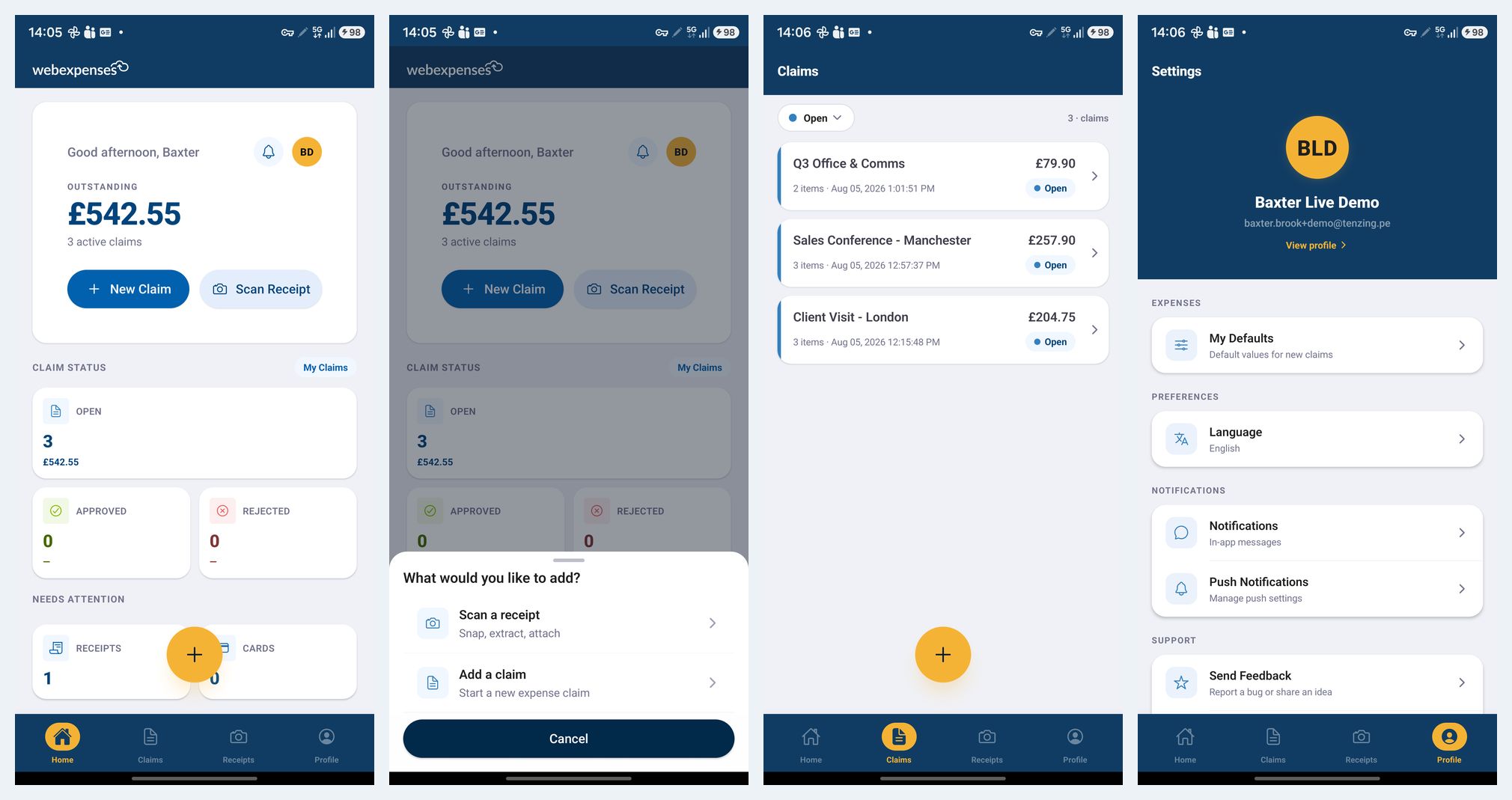
Webexpenses uses a mobile app and OCR (optical character recognition) scanning to convert any paper receipt into a digital expense claim format.
The process is handled digitally. Manual tasks are quickly replaced by fast and efficient automated claim processes.
Accurate data on every aspect of expenses spending is automatically collated. It is made easily accessible via integrated expense reporting tools. Automated checks guard against expense fraud. Alerts are triggered when a claim breaches limits set by the finance team.
Businesses obtain the ability to identify fraudulent family and friend claims that are among legitimate expense claims. Suspicious expense claim trends and activities can be identified early and investigated.
As a result, there is an availability of more efficient monitoring. It makes employees reevaluate the risk/reward ratio when adding fraudulent costs to a claim.
Webexpenses provides a smarter and safer way to manage employee expenses. With our expense management software, you can track and manage expenses both online or through our expenses app.
Friends and Family, or F&F, expense fraud is one of the most common forms of expense fraud. It was highlighted by a global study discussing workplace expense claims dishonesty. Data from Webexpenses 2017.
Find out more about Webexpenses and the services offered by requesting a free demo.