from our US office
Travel expenses are second only to payroll when it comes to controllable business costs. And keeping tight control of these costs, which include transport, accommodation and subsistence reimbursements, has always posed a sizable challenge.
It’s an inability to effectively manage and police travel expenses that makes them a particularly vulnerable area for workplace fraud. It’s a risk that was highlighted recently by the case of 53-year-old radiologist, Dr Jean-Francois Geschwind.
The physician, from Westport, Connecticut, falsely received hundreds of thousands of dollars in travel expenses from his former employers at Johns Hopkins University School of Medicine. This included reimbursements for family vacations to Europe, submitted as being for overseas lectures.
It was only after an extensive investigation by an internal audit team that the fraudulent behavior was identified. Geschwind, who agreed to a plea deal, is scheduled to surrender on December 4th to begin a one-year prison term.
Commonplace Problem
While workplace fraud on this scale is thankfully rare, the practice of falsifying and exaggerating travel costs is something that’s commonplace within many businesses. It’s estimated that U.S. companies lose around $2.8 billion each year to expense fraud.
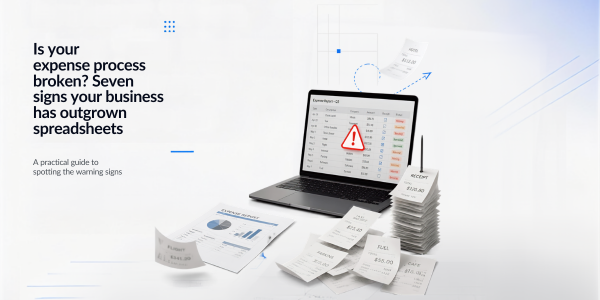
It’s a legacy of outdated systems which rely on paperwork and spreadsheets to try to manage and control reimbursements. It creates a slow and error-prone system with expense information being fragmented and scattered throughout an organization.
It creates the ideal environment for fraudulent behavior with finance teams not able to access the kind of accurate data that’s required to identify and challenge illegitimate costs. It’s the reason that more businesses are moving to cloud-based expense management systems.
Smarter Systems for Expense Management
A system such as webexpenses virtually removes the need for paperwork – replacing cumbersome manual tasks with automated digital processes. With centralized control of data, a finance team can set alerts that are triggered whenever travel reimbursements breach any pre-defined limits.
The system also includes powerful reporting tools that provide finance professionals with the vision they need to effectively monitor costs. Information that would take hours or even days to collate using a traditional system can be accessed within minutes.
It allows a business to identify suspicious spending patterns and to highlight those ‘hotspot’ areas of an organization that would otherwise remain hidden when information is having to be manually collated.
Check out how webexpenses can provide your business with a better way to manage and monitor employee expenses by requesting a demo here.