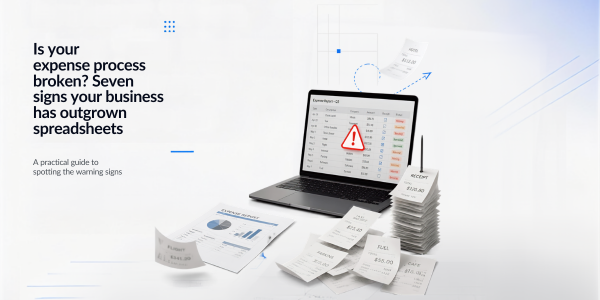
Businesses have traditionally relied on a firefighting approach to policing their expenses policies. They have tasked finance teams with trying to tackle problems when they’re found.
That has required sifting through a mass of forms and paper receipts, searching for fraudulent and exaggerated expenses, for anything that poses a compliance risk.
The time and resources this task requires is the reason many organisations have adopted a pragmatic approach; simply accepting a certain level of losses to error and fraud.
It’s a risky approach and one which can help to create a workplace environment in which ‘fiddling’ expenses becomes normalised – something everyone is perceived to be doing.
But the problems preventing the effective policing of expenses policies are those caused by a reliance on traditional paper-based ways of working.
The emergence of digital expense management systems has fundamentally changed compliance, providing finance teams with powerful new ways to protect companies from risk.
Here’s a look at why digital compliance is such a game changer:
Reactive to active expense compliance
The real-time nature of a digital system allows a shift from the old ‘firefighting’ approach to a much more active form of compliance. It effectively integrates an expenses policy into the day-to-day workflow of employees.
It does this by automatically checking each claim for any breaches or potential problems. When issues are found a compliance warning can be sent to the claimant via an on-screen notification.
It can also send alerts to the finance team, allowing them to investigate the validity of any suspicious claims. It allows issues to be tackled before they become problems.
Taking control of business mileage
Trying to properly manage and monitor mileage expenses is a thankless task with a paper-based system which relies on employees providing guesstimates for distances travelled.
The switch to a digital system allows the exact route and distance of any road journey to be recorded via a smartphone app. It’s a fast and simple way to ensure accurate mileage claims.
Access to expenses data
When it comes to external compliance, a company needs to be able to prove that they have an effective expenses policy in place and the tools required to monitor and enforce it.
This is exactly what a digital system provides as it collates all of the data required to show the entire process of a claim – including any compliance checks along the way.
If a company is subject to any kind of audit, particularly from tax authorities, it provides the information they need to show that proper checks and balances are in place.
Making compliance simple
One of the powerful ways a digital system can play a pro-active role in compliance is the way that claims are made. It removes the need for employees to face the dreaded monthly task of filling in a claim form and attaching a bundle of receipts.
Instead, any paper receipts can be instantly converted into digital form using the smartphone app. Claims can be submitted as and when the employee wants – this is often immediately after the cost has been incurred.
By removing the pain and hassle from claiming back costs, it helps to remove the ‘toxicity’ from expenses, making it a seamless part of the workflow – not monthly torture.
It can be seen, therefore, how digital systems are helping businesses to adopt a fresh approach to compliance – moving to active prevention as opposed to reactive ‘firefighting’.
In doing so, it’s helping to protect businesses against the risks of both internal and external compliance breaches. You can find out for yourself how a digital system can boost compliance by taking Webexpenses for a demo here.