Finance teams enforce expense policy compliance by building the check into the moment a claim is submitted. A claim outside a pre-set limit simply doesn’t go through, rather than being flagged and queried after the event.
Corporate card controls extend the same principle to the transaction itself, verifying spend as it happens rather than relying on a receipt submitted afterwards. That timing shift changes the whole dynamic of spend policy. Expense policy stops being something finance does to people, and becomes something the system does with them.
The old model: policing spend after it’s already happened
For years, expense policy compliance meant a finance team member working through a pile of claims after the fact, checking receipts against a policy document, and querying anything that looked off.
This mostly worked, in the sense that it often caught problems. But it put finance in an adversarial position by design.
Every out-of-policy claim became a conversation someone had to have: chasing an employee, rejecting a claim, explaining a rule after someone had already spent the money and was expecting to be reimbursed for it.
Point of submission: the system says no before finance has to
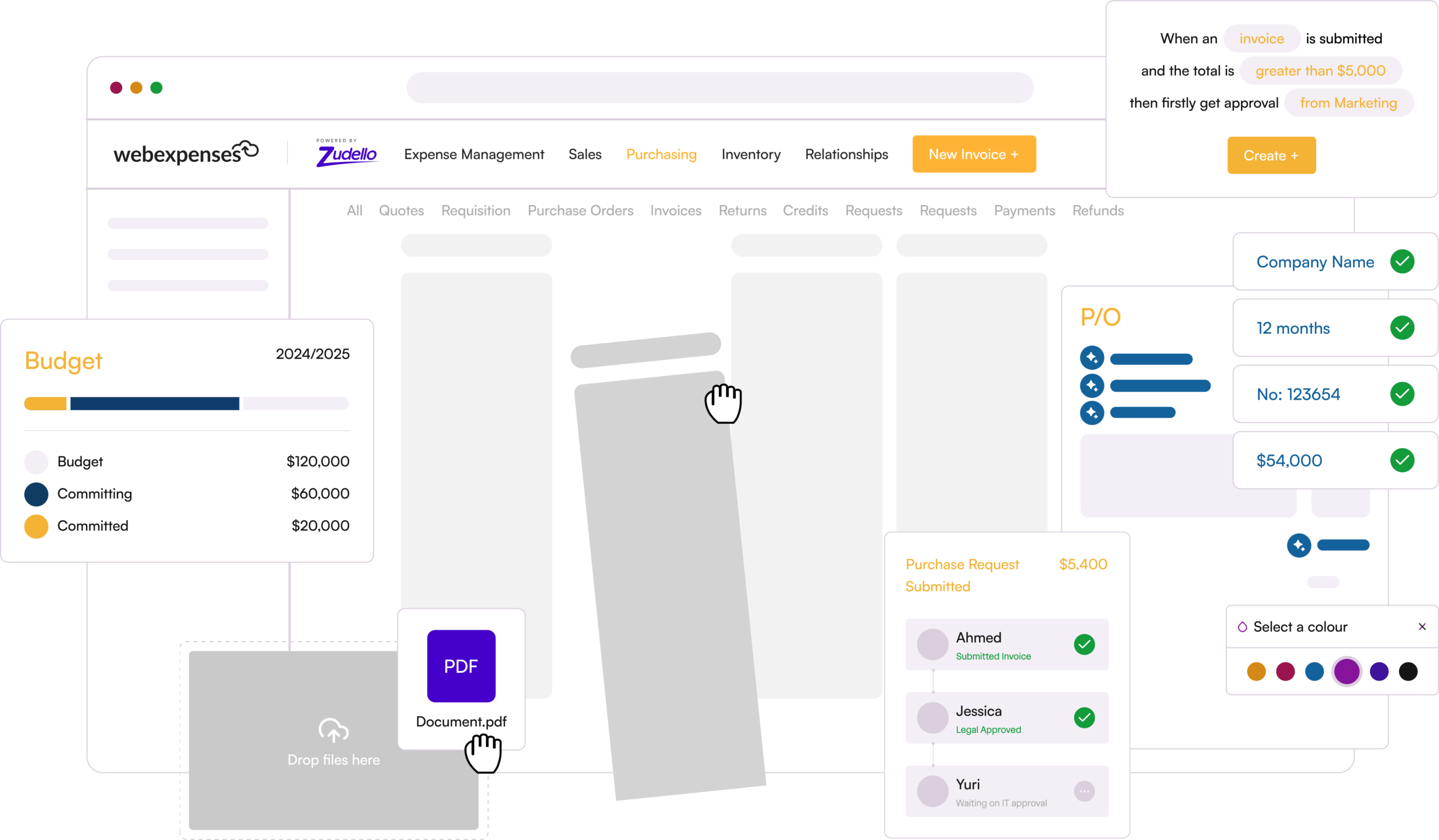
The more effective approach moves the check to the moment someone tries to submit a claim, so compliance is built into the act of submitting rather than assessed afterwards. With Webexpenses, your company’s policies sit inside the platform your employees are already using to submit expenses. That means:
- Category spend limits are set once by an admin and applied to every claim in that category the same way, across the whole business.
- Out-of-policy claims are stopped at the point of submission itself, rather than being caught days later during a review.
- Real-time alerts notify the right person the moment a claim falls outside policy, so nothing sits in a queue waiting for someone to notice.
Not every rule needs to work the same way. Hard limits stop a claim outright: a category spend cap that simply won’t let a claim through above the threshold. Soft limits flag a claim as out of policy but still let the employee submit it, usually with a note or justification attached, so it can route to an approver rather than blocking the claim entirely.
That’s where genuine exceptions fit in: a client dinner that ran over, a hotel that cost more because of a conference. Under a soft limit, the employee flags it and explains at the point of submission, and that conversation happens organically, as part of filing the claim, rather than finance having to go looking for it afterwards.
Under a hard limit, there’s no such route: the claim simply doesn’t go through, and any exception has to be handled outside the system entirely. That distinction matters because not every policy breach is equally serious, and finance can decide upfront which rules deserve a hard stop and which just need visibility.
The practical effect is that the employee finds out they’re outside policy while they’re trying to file the claim, not after finance has processed it and they’re expecting a reimbursement that isn’t coming.
Learn by doing: how this approach helps employees
Normally, expense policies live in a PDF somewhere. It’s there, and people might read it, but it’s unlikely to have a big impact on compliance.
There’s a well-documented reason for this. Decades of psychology research on the generation effect shows that information we have to act on or produce ourselves is remembered far better than information we simply read. Reading a policy engages the kind of memory that stores facts, the sort you could recite in a meeting but not necessarily act on under pressure.
Bumping into a limit while trying to submit a claim engages something closer to learned behaviour: the kind of memory built from doing, not reading. That’s the difference between knowing a rule exists and actually adjusting how you spend.
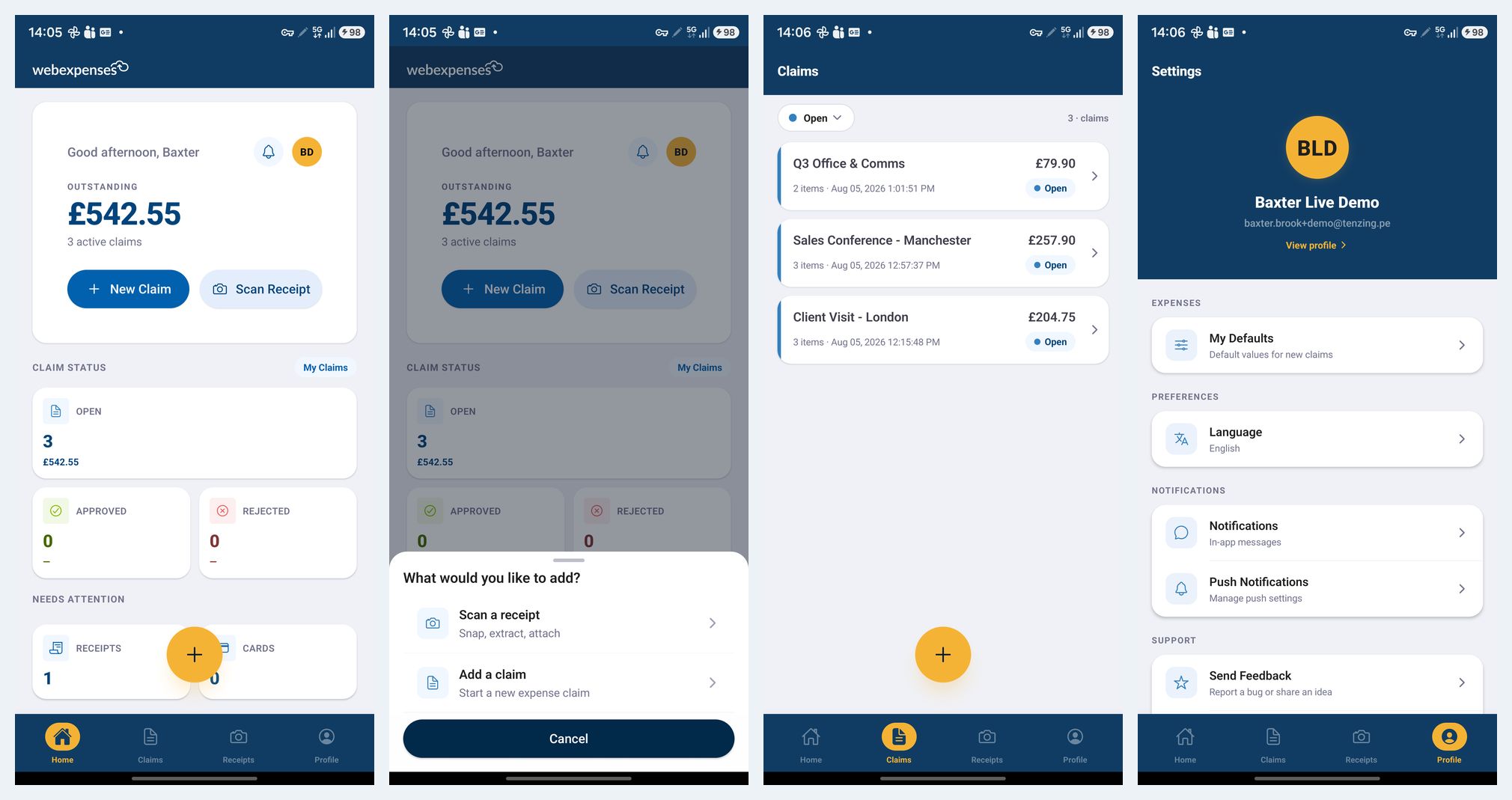
And employees can easily check on limits before they even get there. Next to the category field, they can tap the info icon to bring up that category’s policy limits (breakfast, lunch, evening meals, and so on) before they’ve even entered an amount. It turns the policy from something to remember into something to check, right at the point it’s needed.
The next time that employee is close to the limit, they don’t need to recall a document. They already know the limit’s there, either because they’ve checked it directly or because they’ve bumped into it before.
That’s a small shift with a real effect: the policy stops being something the employee is trusted to remember, and becomes something the system, on the company’s behalf, checks every single time.
Corporate cards close the door on receipt fraud
Our Corporate Cards are another useful component in keeping spend within policy. Most simply, they let you set a spend limit on an individual card. A transaction above that limit simply won’t complete. It’s something clear and tangible for your people.
Cards also come with the usual regulatory restrictions built in, such as blocks on transactions involving sanctioned countries like North Korea, the same baseline compliance any card scheme applies.
But the bigger shift is what happens with confirming transactions. Every card transaction is confirmed by multiple independent parties before it settles: the payment processor, the card scheme and the payment platform all verify the transaction at the point of authorisation.
When the employee’s receipt comes in afterwards, it can easily be matched against that record as a second confirmation, rather than being the only evidence finance has to go on.
This matters more than it used to. AI-generated receipts accounted for around 14% of fraudulent expense documents submitted in 2025, according to ICAEW, up from close to nothing the year before. A convincing fake receipt is a real problem if a receipt is the only thing finance has to check against. It’s a non-event if the spend was already verified by the card scheme before the receipt was even generated.
Corporate Cards also remove the reimbursement cycle for card spend entirely, so employees aren’t out of pocket while a claim works its way through approval, and finance gets full visibility of every transaction from a single dashboard, in real time, rather than after month-end reconciliation.
Common questions
- What does “point of submission” enforcement mean? It means the expense policy is checked at the moment someone tries to submit a claim, not after finance has already processed it. A claim outside a pre-set limit is stopped there and then, rather than being flagged during a later review.
- Can an employee still submit a claim that breaks policy? They can raise it as an exception and explain the circumstances, but the claim doesn’t go through as normal. The burden of making the case sits with the employee, not with finance chasing it down.
- How do spend limits get set in expense software? An admin sets category spend limits once, and the system applies them to every claim in that category, across the whole business, without needing to be reconfigured claim by claim.
- How do corporate cards help with expense fraud? Because a card transaction is verified by the payment processor and card scheme at the point of authorisation, the expense record is created from that verified data. A receipt submitted afterwards becomes a second confirmation rather than the only evidence finance has to work with, which matters given how convincing AI-generated fake receipts have become.
Why this matters beyond the compliance number
The real benefit of checking policy at the point of submission isn’t just a lower violation rate. It’s that finance’s role shifts from gatekeeper to the team that set up the guardrails in the first place.
If an employee wants to challenge a decision, they’re arguing with a policy the business defined, not with a colleague who has to personally hold the line.
Employees get a faster, clearer answer. Finance gets fewer awkward conversations. Nobody has to be the bad guy for a rule they didn’t even write. Corporate Cards do the same thing for a different problem: they take the receipt, and the room for doubt around it, out of the equation entirely.
Book a demo to see how Webexpenses builds policy compliance into your expense process from the point of submission.