
The question we get asked more than any other after a demo: how painful is this to implement? Honest answer: less painful than you’re expecting. We’ve done this thousands of times. We know where the complexity is, we plan for it, and we handle the parts that don’t need your team’s time.
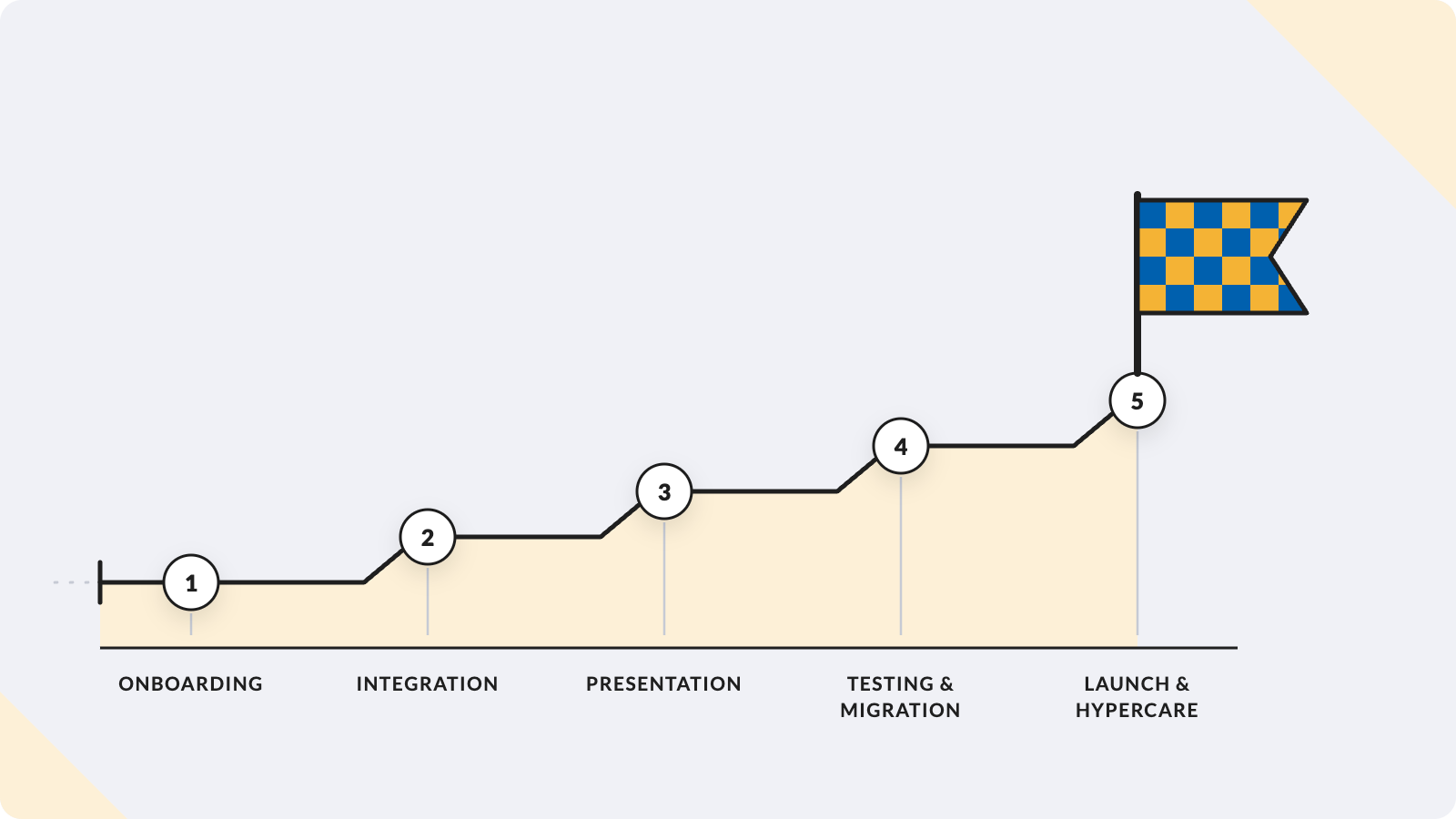
Implementing a new solution should feel exciting, not overwhelming. Our Project Delivery team will guide you through every stage of your onboarding journey, from initial onboarding, discovery and solution design through to launch and ongoing success. With proven methodologies, expert guidance, and a focus on best practice, we’ll help your team build confidence, drive adoption, and realise value from Webexpenses as quickly as possible.
No two organisations are the same, which is why we don’t take a one-size-fits-all approach to onboarding. Your dedicated Project Delivery team will guide you through each stage of the journey, working with you to create a delivery plan that aligns with your objectives, available resources, and desired outcomes. Together, we’ll maintain momentum while ensuring every milestone is completed with confidence.
It’s a legitimate concern. ERP integration is the most technically involved part of any expense management deployment. What makes it manageable: we have pre-built, tested connectors for 50+ ERP and accounting systems. Integration mapping happens early, alongside onboarding, with your IT team involved mainly to confirm the connection is working. For non-standard setups, we scope the work in advance and tell you exactly what’s involved before you sign.
Webexpenses implementation is designed to require minimal internal resource. Your Project Delivery Manager runs the onboarding, presentation, and testing calls; your team’s job is mainly to show up to those, confirm data and configuration choices are right, and complete training. It’s a handful of calls across your onboarding journey, not a parallel project.
It will change how you work. That’s the point. What it won’t do is break anything in the meantime. Pilot users test the system end-to-end during the Testing phase, so problems get caught and fixed before go-live, not after. Launch is a clean switchover on a planned date, with a month of hypercare support straight afterwards.
That’s a normal part of any software deployment and we’re prepared for it. All security documentation is available in the Trust Centre: ISO 27001 certification, SOC 2 Type II, PCI DSS, penetration testing summary, GDPR DPA. Your IT team can review it without a sales call.

“The implementation went extremely smoothly for both our project team and for our users. We have also added on another entity since the initial implementation and again this went smoothly with the team helpfully preparing everything they could for us in advance.”
IOP Publishing
You’ll receive an onboarding email with your Webexpenses Onboarding Process and a link to a secure project portal. Key project data is completed where your contract requires it, and your Project Delivery team will be in touch to schedule your first session: a Presentation or Integration call, depending on your setup.
A pre-integration call confirms any prerequisites are in place and establishes a successful connection to your systems. A follow-up integration call covers integration mapping and live configuration, so your data is flowing correctly before you move into the Presentation phase.
A presentation call walks through your configured Webexpenses system, pilot users are established and added, your user data is confirmed as ready, and testing guides are shared. Training is completed via Learniversity. Depending on what’s in your contract, this stage can also include an audit call, a corporate card call, or a payments call.
Your team tests the Webexpenses system end-to-end, feeds back on setup, and works through your internal change management approach with our team’s help. Go-live is confirmed, and account management and support are established ready for launch. Where relevant, this stage also covers migrating from your sandbox to a live ERP environment, plus any corporate card or payments calls.
Onboarding, Integration, Presentation, and Testing & Migration run in sequence, each building on the last.
Internal comms go out and welcome emails are sent from Webexpenses on your launch date. From there: one month of hypercare support, a clean handover to your Account Management and Support team, and formal project close-out.
Launch & Hypercare follows once testing and migration are signed off, with a month of hypercare support built in afterwards.
The implementation guide covers the full onboarding process in detail: what happens in each phase, what your team needs to provide, what questions IT typically asks, and what go-live looks like. Four to six pages, no sales content.
Implementation risk is usually the visible worry. The quieter one is what happens six months in, once the project team has moved on to other things. Is there still somewhere to go when a new starter needs training, or a report won’t build the way you expect, or someone just wants to check they’re using a feature properly.
Support is layered, so most questions get answered without anyone raising a ticket at all.
Contextual tooltips and pop-ups guide you through new features and tasks as you use them: on-hand support without leaving what you’re doing.
Built into the platform for every user, with step-by-step walkthroughs tailored to each person’s role. A claimant sees different guides to an approver or an admin. Connects straight through to the Customer Hub for anything it doesn’t cover.
Downloadable user guides, quick guides, Knowledge Base articles, FAQs, release notes, and a live system status page, available 24/7 for self-serve digital support at hub.webexpenses.com. If a guide doesn’t answer it, Wade (our support chat) can find what you need, raise a ticket on your behalf, or connect you to a live agent.
Phone and live chat support is available Monday to Friday, 9am to 5pm UK time, with equivalent business-hours coverage across our Americas and Asia-Pacific teams. Every ticket is assigned a priority level with a documented first-response and resolution target, ranging from a 1-hour first response on critical, system-wide issues, down to 5 hours for general how-to questions. Full priority definitions are set out in our Support SLA.
From go-live, you have a named Account Manager: your first point of contact for software training, account queries, adding users or entities, contractual changes, and scoping any further work. Day-to-day technical questions go through the Hub and live support; anything relationship-level goes through your Account Manager.
| Priority | Scope | First response | Resolution target |
|---|---|---|---|
| Critical | All users unable to use the application | 1 hour | 4 hours |
| Urgent | Unable to transfer claims / pay employees | 2 hours | 16 hours (2 business days) |
| High | Lost claims or data | 3 hours | 24 hours (3 business days) |
| Medium | Performance issues / unable to use an important feature | 4 hours | 32 hours (4 business days) |
| Low | Cosmetic change / how-to questions | 5 hours | 40 hours (5 business days) |
We’ll scope it before you sign anything. Webexpenses has pre-built connectors for 50+ systems. For systems outside that list, we assess what’s required and give you an honest answer about feasibility, timeline, and any additional cost.
Yes. Phased rollouts are common, particularly in larger organisations. A typical approach: go live with a pilot group first, confirm the configuration is right for your business, then roll out to the rest of the organisation.
You have a named Account Manager from day one for anything account-level, plus 24/7 self-serve access to the Customer Hub and live agent support during UK business hours (9am to 5pm, Monday to Friday). See “Support doesn’t stop at go-live” above for the full layered model and documented response times.
99%. When finance teams switch to Webexpenses, they stay. That’s the clearest signal we have that the platform delivers after go-live, not just during the sales process.
A collaborative onboarding experience designed for long-term success. Your Project Delivery team guides you from initial onboarding through to launch, and stays with you through a month of hypercare after that.
Platform
FRONT OFFICE
BACK OFFICE
Capabilities
EXPENSES
ACROSS THE PLATFORM
TRUST AND ROADMAP