Code every claim, invoice and order to the client and engagement when it is raised, so rebilling is a report, not a reconstruction.

Costs paid to third parties on a client’s behalf never reach the invoice, and the firm absorbs them.
Fee-earners claim long after the cost was incurred, and the recoverable expense is written off because the evidence is gone.
The wrong client or matter code is found when the client queries an invoice, not when the cost was incurred.
Unbilled time and costs sit in work in progress because the expenses side was never reconciled to the engagement.
Temporary staff and contractors submit through different routes and different cut-offs, and payroll chases for the detail.
Travel, mileage and subsistence get claimed in batches, and the client’s own rate rules make each one a small dispute.
Out-of-pocket claims, mileage and card reconciliation. Policy applied as the claim is entered, and people paid without the chase.
Explore Expense Management →Budgets structured the way your business is, with every commitment measured against the right one before it is approved.
Explore Budgets →Requests raised in one place and approved against budget and policy before the money is committed. Nothing bought off-contract.
Explore Purchase Orders →Invoices read as they arrive, matched to the order and the receipt, and routed to whoever can approve them. More volume, same team.
Explore Accounts Payable →*Expense Management is available today as a standalone Webexpenses product. Full integration with the platform is coming soon.
Incur. The cost is claimed, or the order is raised, and coded to the client and engagement at the point of entry.
Split. A cost that belongs to more than one engagement is split at submission, not corrected later.
Approve. The right engagement lead approves the cost against that engagement’s budget.
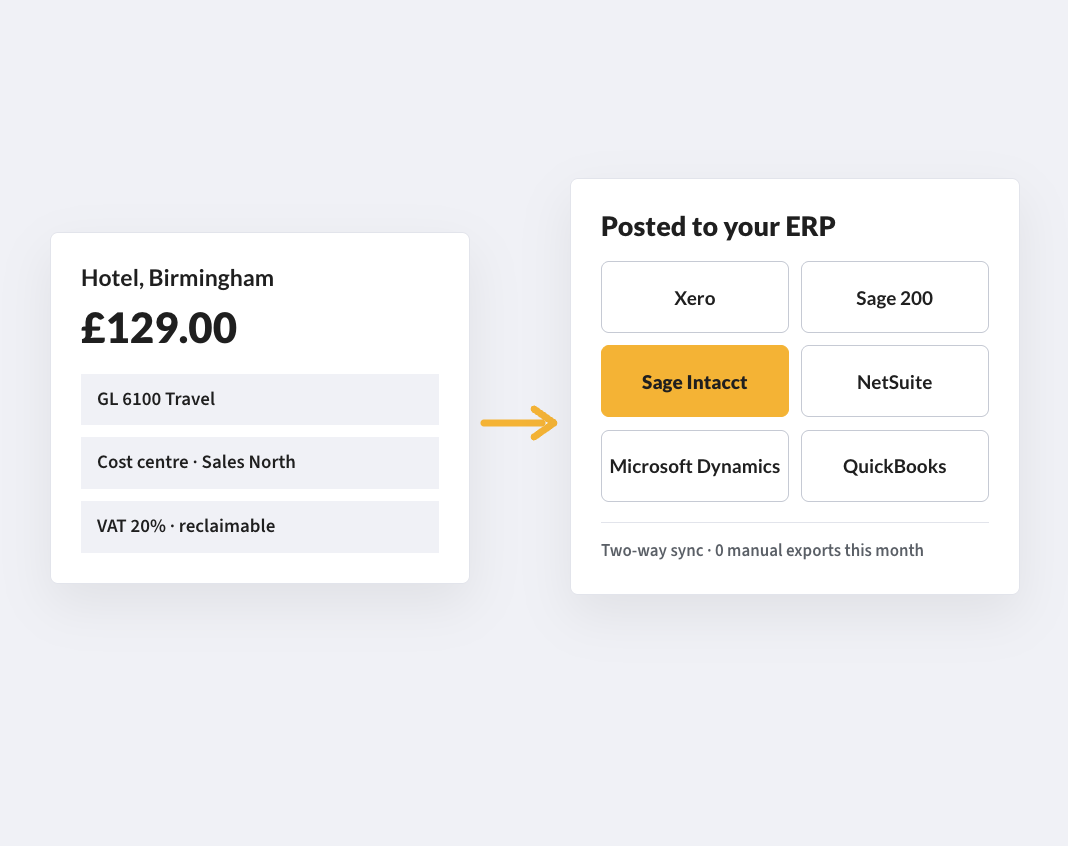
Post. Supplier invoices and purchase orders carry the same client and engagement codes into your ledger.
Rebill. What the client owes you is a report by client code, ready for the invoice.

Client codes, project references and cost centres are configurable and applied when the cost is entered, so consultancies, agencies and practices can tie spend to the engagement without a separate reconciliation step. Receipts are required before a claim can be submitted.
*Expense Management is available today as a standalone product. Full integration with the platform is coming soon.
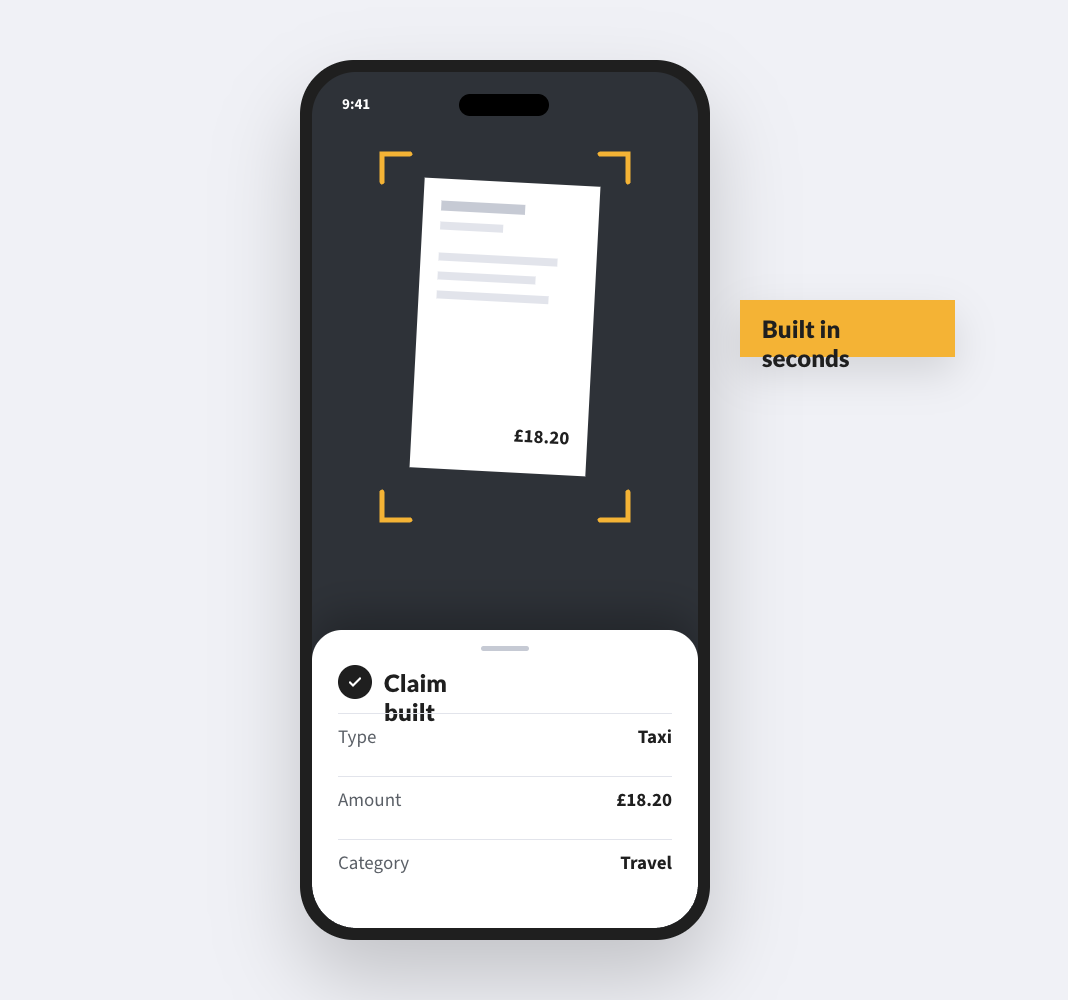
Fee-earners claim from their phones, scan the receipt and log mileage by postcode or GPS at HMRC rates. One claim with costs on several engagements can go to the right people for each.
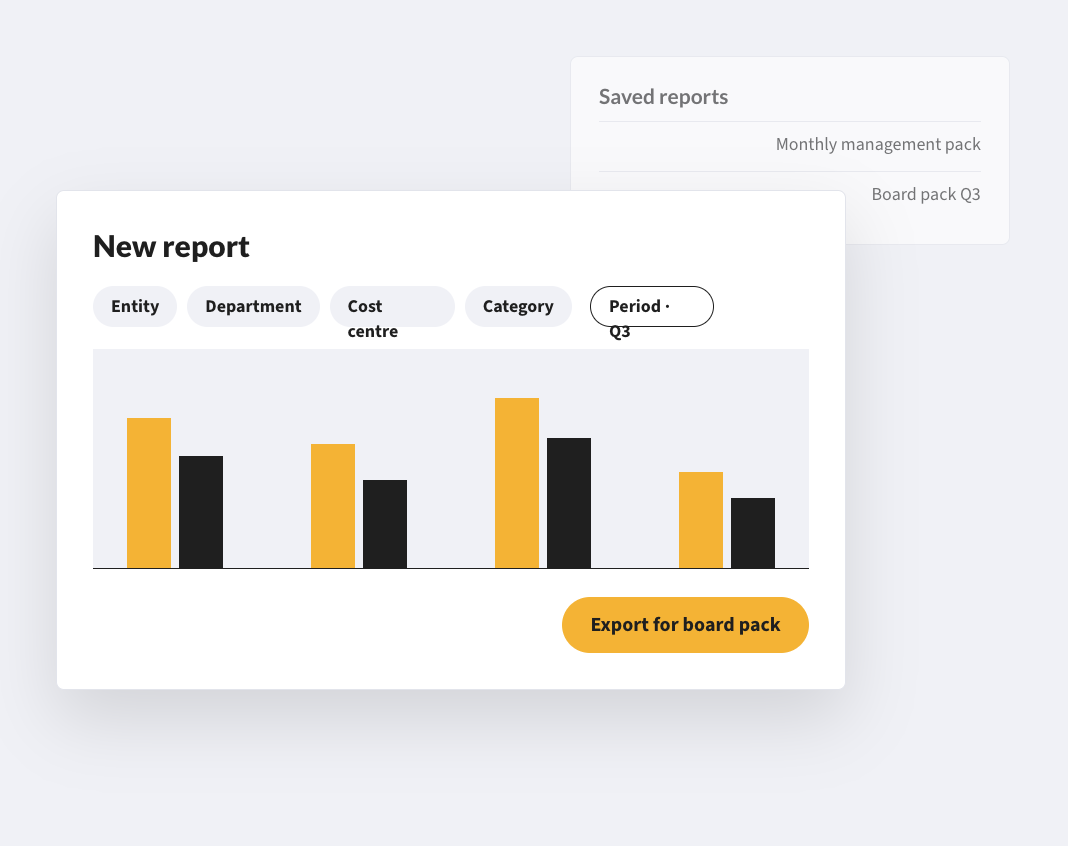
Budgets shows spend against each engagement as it builds, so an engagement running over shows up while there is still time to talk to the client.
“It used to take me at least a day to consolidate, analyse and process all the expenses claims for the company but now, using Webexpenses, it only takes me a couple of hours.”
Procure4UK Business Analyst“Webexpenses was probably one of the easier change processes we’ve done because people could see it make a difference very quickly. It was easy to convince them to change.”

DRP GroupIT Project Manager“I cannot stress how much better Webexpenses has been than our old paper based system. The management information now available to us is substantial, everything is there!”
Adecco GroupHead of PayrollYes. Client codes and project references are configurable and applied at the point of entry, so cost is tied to the engagement it belongs to without a separate reconciliation step.
Yes. A single expense item can be split across cost centres or client codes at submission, by the claimant or the approver.
VAT is captured from receipts and categorised against the correct rate, and VAT-ready reports feed your accounting system. How a pass-through cost is treated for VAT and revenue is a question for your accountant.
Yes. You pay for active users, so people can be added when a placement starts and removed when it ends.
Yes. Webexpenses integrates with the main finance systems, including Oracle, Microsoft Dynamics, NetSuite, Sage Intacct, Xero and QuickBooks, and approved data posts without re-keying. For anything else, we scope it in the discovery call.
No. Expense Management is available today as a standalone product. Other modules start with a discovery call so we can scope what you need.
Expense Management is set up in five phases: onboarding, integration, presentation, testing and migration, then launch and hypercare, with our team alongside you throughout. Platform modules start with a discovery call, where we scope what you need and how it would be set up.
Costs coded to the client and engagement from the moment they are raised.
See how your purchase-to-payment controls score →Platform
FRONT OFFICE
BACK OFFICE
Capabilities
EXPENSES
ACROSS THE PLATFORM
TRUST AND ROADMAP
By Role
By Industry
By Industry
Vendor Validation
Broader Audience