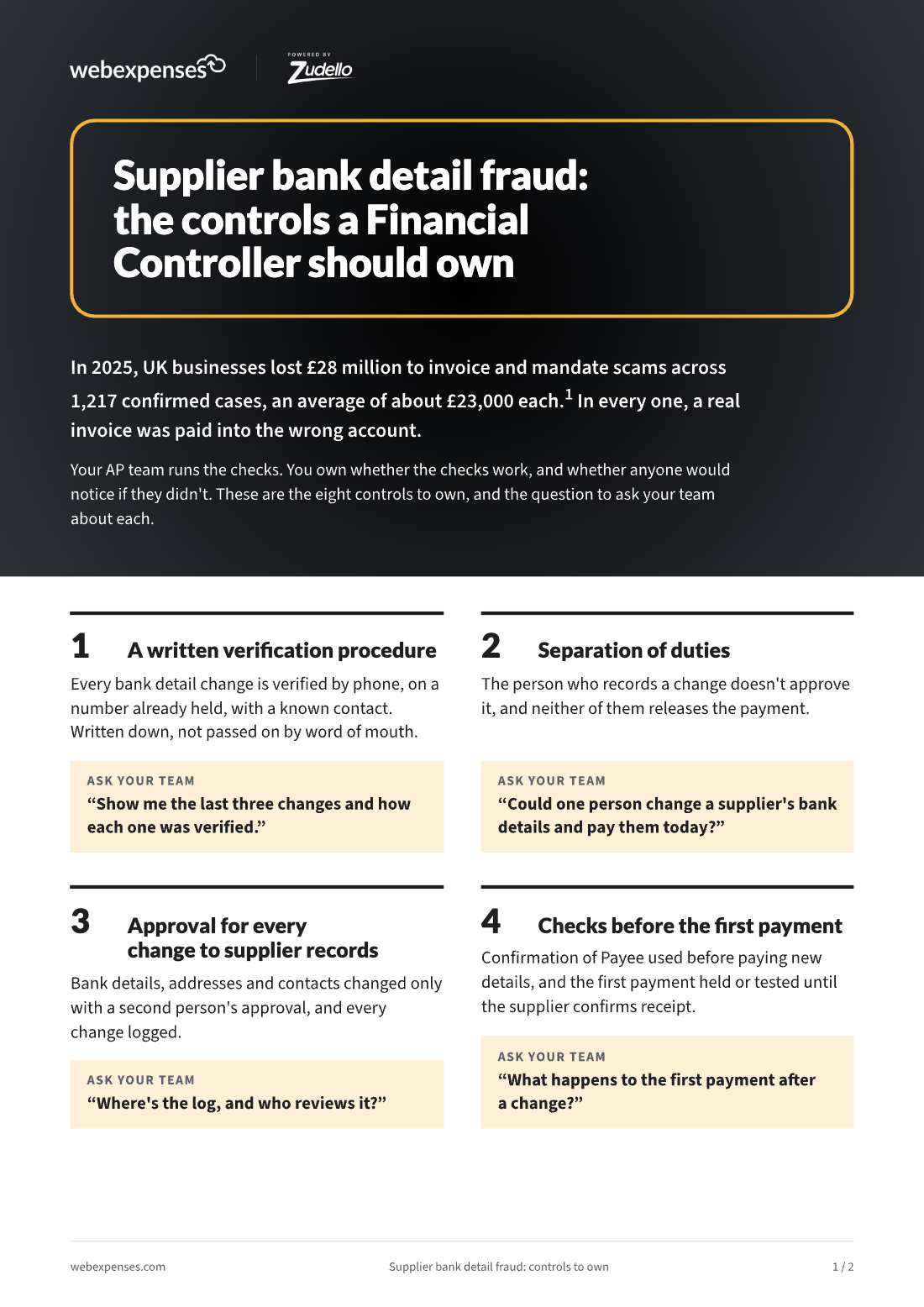
In 2025, UK businesses lost £28 million to invoice and mandate scams across 1,217 confirmed cases, an average of about £23,000 each. In every one, a real invoice was paid into the wrong account.
£28m lost by UK businesses to invoice and mandate scams in 2025
Source: UK Finance, Annual Fraud Report 2026 (covering 2025), invoice and mandate scams on business accounts. Average per case calculated by Webexpenses.
1. The eight controls
- A written verification procedure. Every bank detail change is verified by phone, on a number already held, with a known contact.
Ask your team: “Show me the last three changes and how each one was verified.” - Separation of duties. The person who records a change doesn’t approve it, and neither of them releases the payment.
Ask your team: “Could one person change a supplier’s bank details and pay them today?” - Approval for every change to supplier records. Bank details, addresses and contacts changed only with a second person’s approval, and every change logged.
Ask your team: “Where’s the log, and who reviews it?” - Checks before the first payment. Confirmation of Payee before paying new details, and the first payment held or tested until the supplier confirms receipt.
Ask your team: “What happens to the first payment after a change?” - A regular review of supplier records. Shared bank accounts, a supplier sharing an employee’s account, dormant suppliers that suddenly need paying. Checked every quarter.
Ask your team: “When did we last review the supplier file, and what did we find?” - A monthly report of bank detail changes. Every change in the month, who requested it, who verified it and how. Reviewed by you.
Ask your team: “Can you send me this month’s changes by Friday?” - Training, with permission to slow down. Fraud works on urgency. Make it clear nobody is criticised for delaying a payment while they check.
Ask your team: “Has anyone ever felt pressured to pay before checking?” - Invoices matched before they’re paid. An invoice for something never ordered or received should never reach a payment run.
Ask your team: “What share of invoices are matched to a PO and receipt?”
2. Build the controls into the process
Controls that rely on memory fail at month-end, during holidays and when someone new joins the team. The safest controls are built into the workflow.
For your AP team: share our 10-point supplier bank detail fraud checklist.