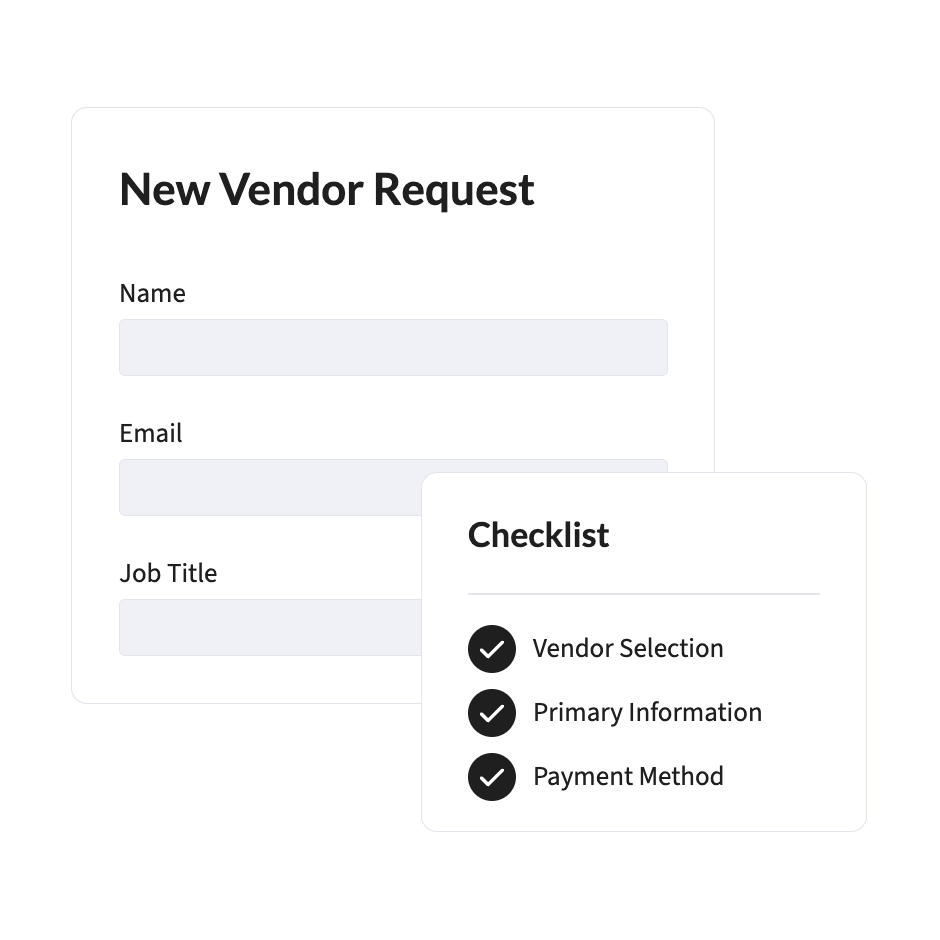
Every invoice read, matched against what was ordered and received, and routed to whoever can approve it. Your team decides on the invoices that need a decision.
Nobody can find the order that goes with the invoice
One supplier query means asking three people.
Volume spikes land on the same people
Month end gets longer, the team doesn’t get bigger.
Each entity codes differently
Different VAT treatment, different approvers, different spreadsheets.
Audit prep means rebuilding the record
The trail exists. It’s just spread across inboxes.
Agreed terms rely on memory
An invoice above the agreed rate gets paid unless someone notices.
The cost of doing it by hand
Ten minutes an invoice adds up
On average, a single invoice takes 10 minutes to process by hand. At 1,500 invoices a month, that’s more than 250 hours of reading, keying, matching and chasing. The same team, every month, and the number grows with every new supplier. See how to scale without adding headcount →
Invoices approved, checked and paid, without the chase
Find
Answer a supplier query in seconds
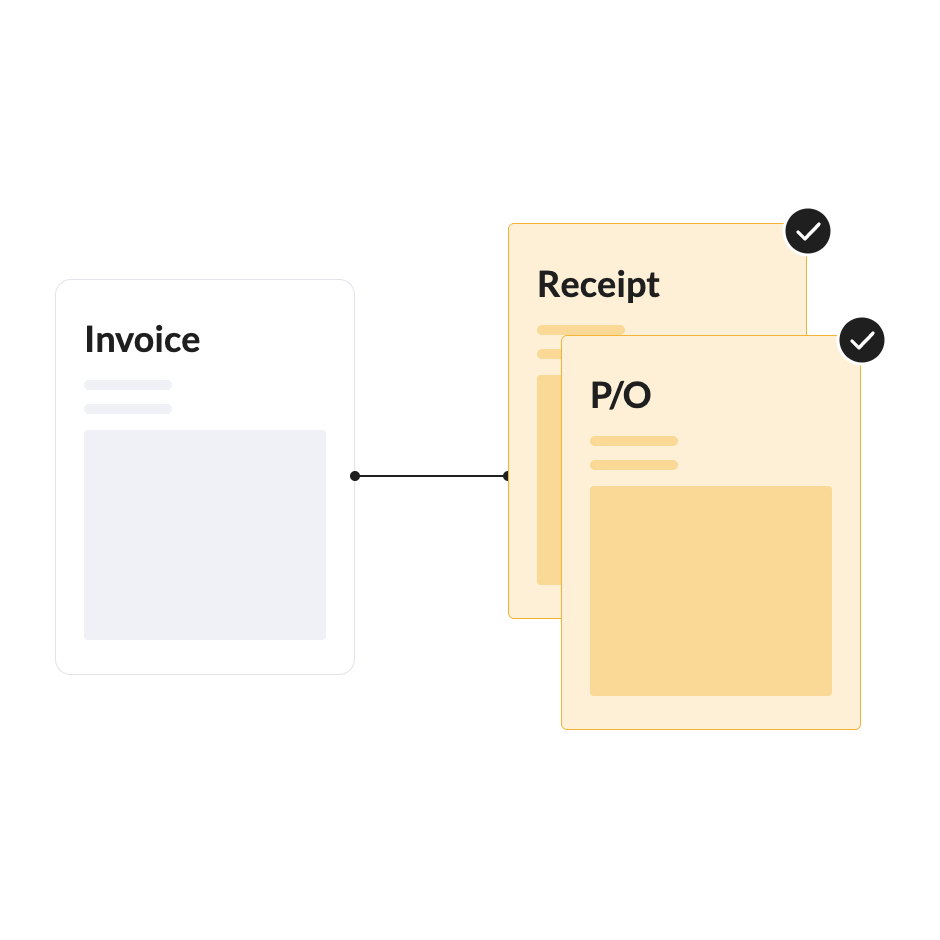
Invoice, order, receipt and approval sit together, so nobody goes looking.
Protect
Pay only what you agreed
Agreed terms hold on every invoice, and duplicate or off-contract spend is flagged before it is paid. Approvals don’t stall, so suppliers are paid on the terms you agreed.
Show
Hand the auditor the record, not a project
Who approved what, and when, is captured as it happens.
Scale
Add approvers, not licence fees
There’s no per-user licence for Accounts Payable, so everyone who needs to approve can, at no extra cost. Pricing is based on your volume.
By email, upload, portal or API, as PDF, Excel, Word or image.
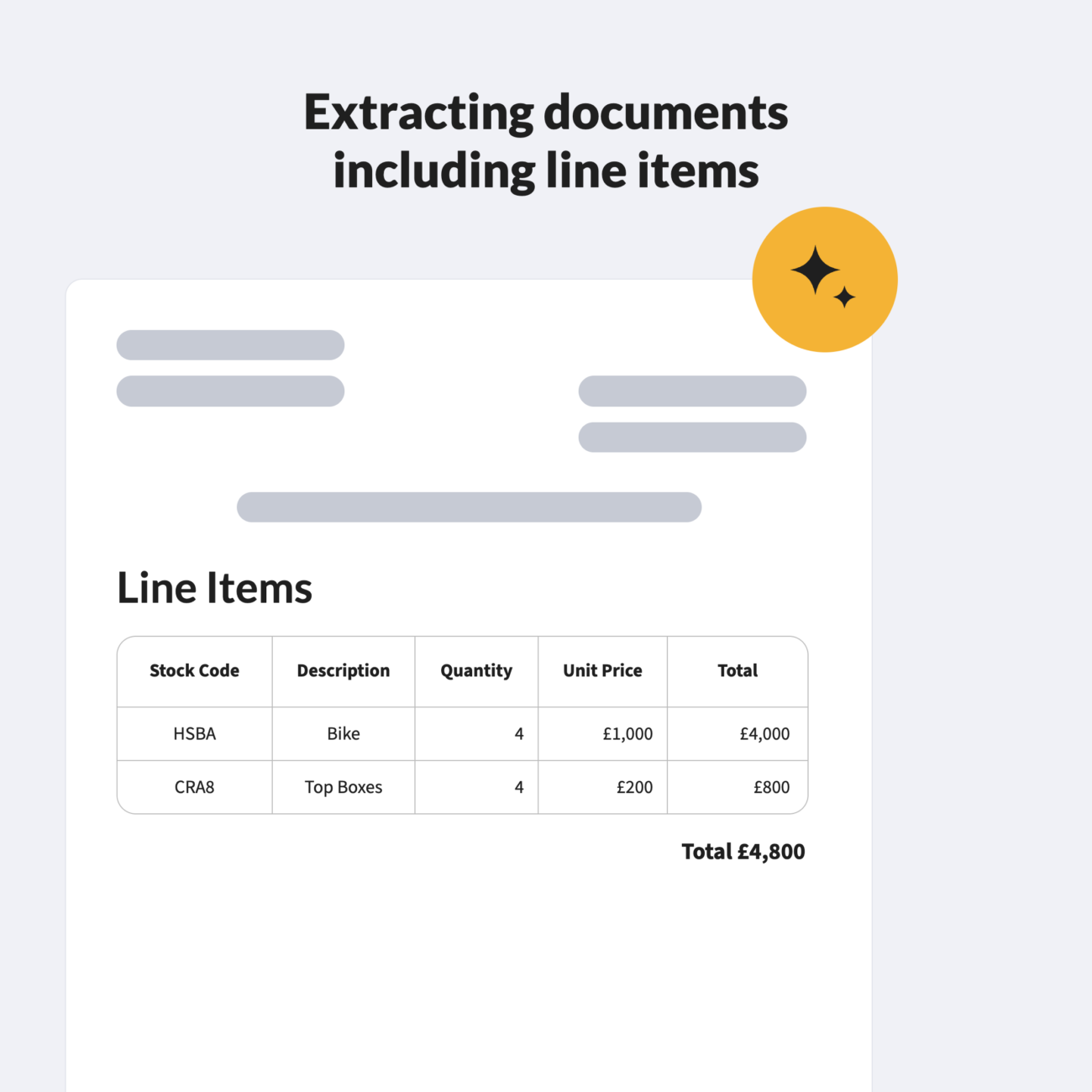
Read to line level
Supplier, amounts, VAT and line items extracted, then coded to GL, cost centre, entity and VAT/GST.
Matched
Checked against the purchase order and the goods receipt.
Approved
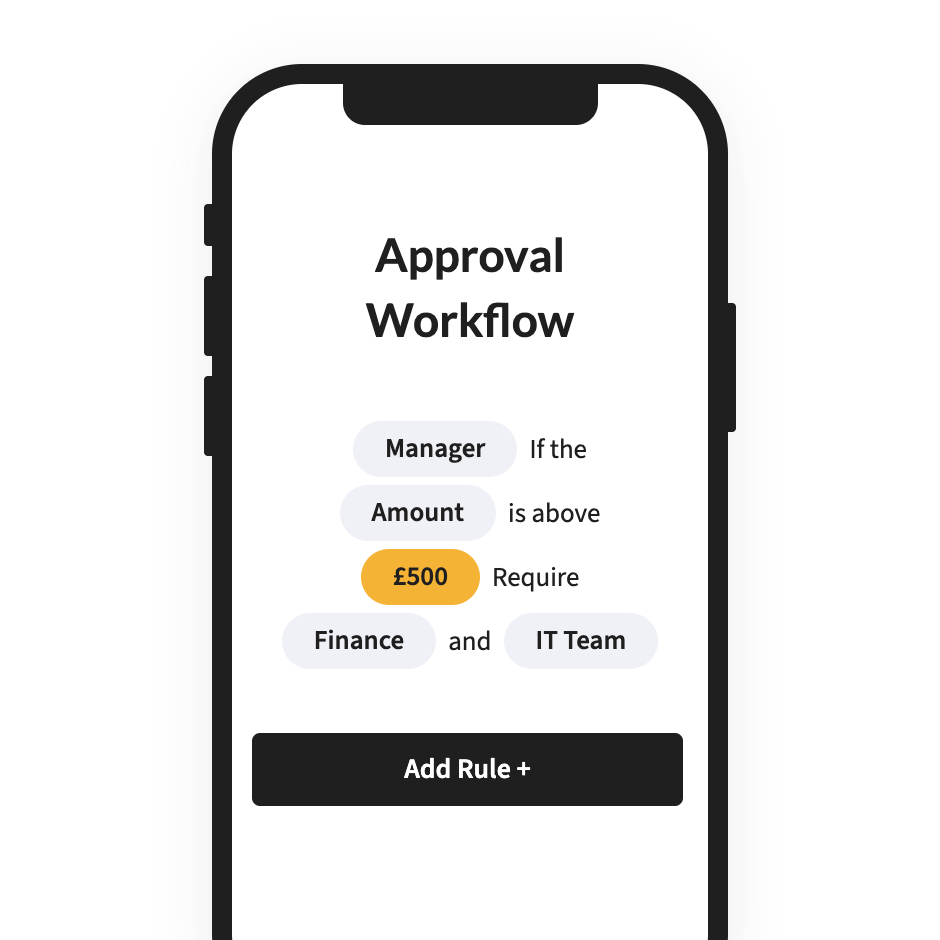
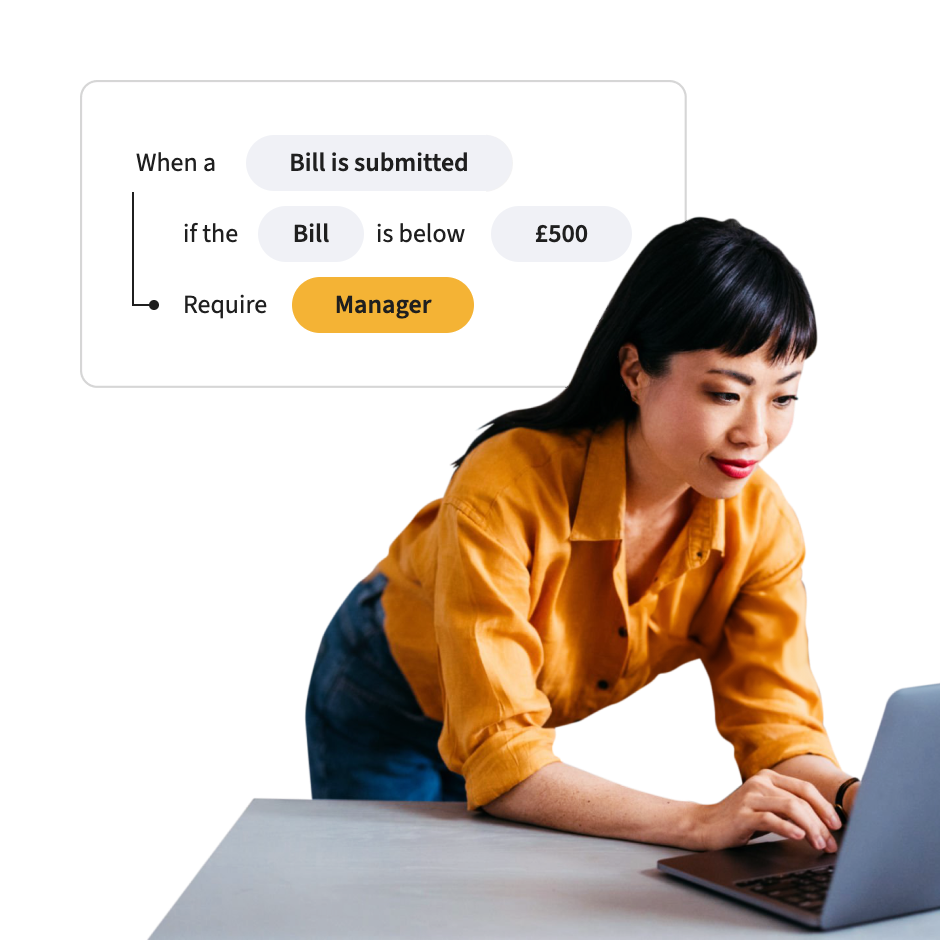
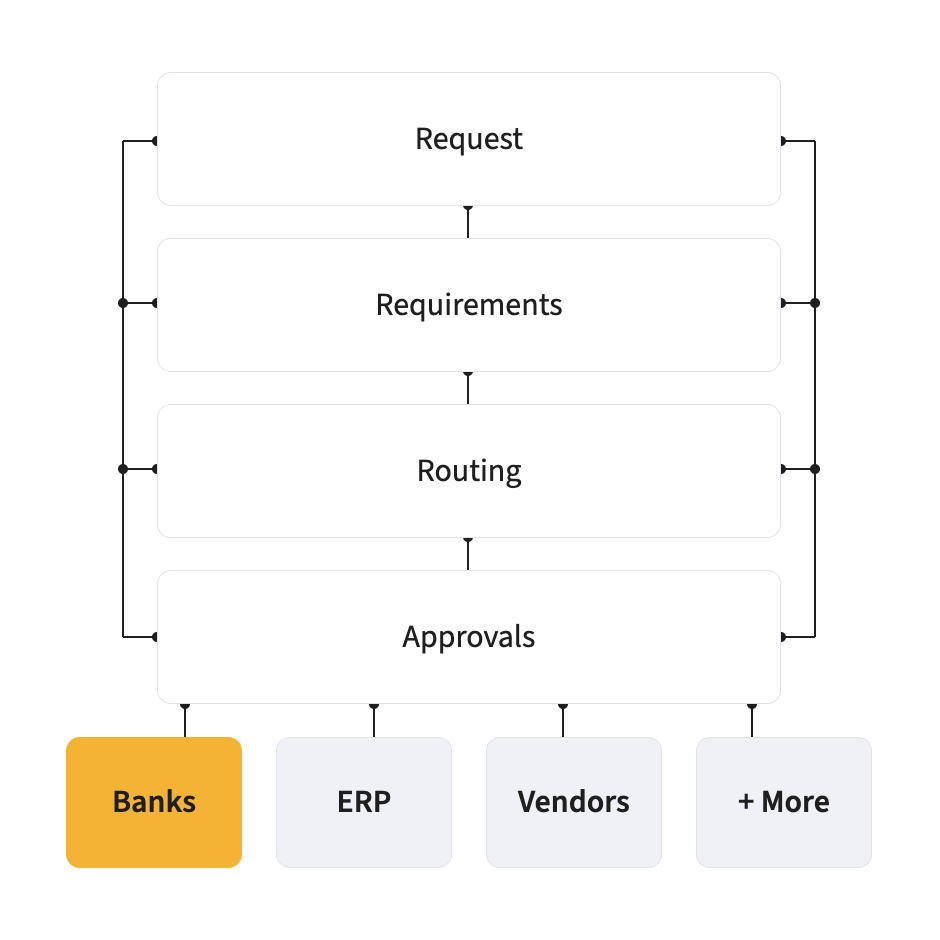
Routed to the right approver under your rules, with reminders if it stalls.
Posted
Written back to your finance system. Your ERP stays the system of record.
Features
Financial controls from day one
Workflows enforce approvals, budget limits and negotiated supplier terms as invoices move, so the control sits in the process rather than in somebody’s memory.
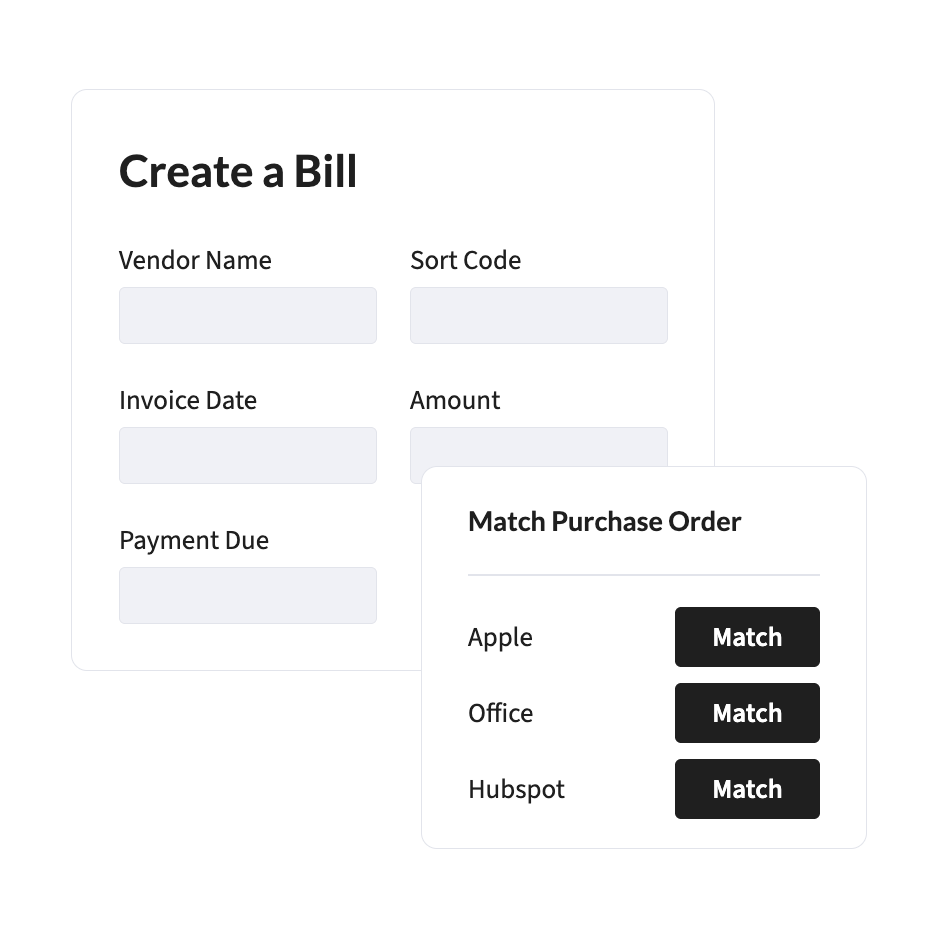
Every invoice checked against what was ordered and what was received, on itemised or blanket purchase orders, catching overpayments before they are paid.
Every invoice shows its status at every stage, from arrival to posting, and who it is waiting with. AP reporting gives CFOs and controllers the position on volumes and approvals without asking the team for an update.
Supplier statement reconciliation
Statements matched automatically against the invoices you hold. Gaps and duplicates show up before the supplier chases you.
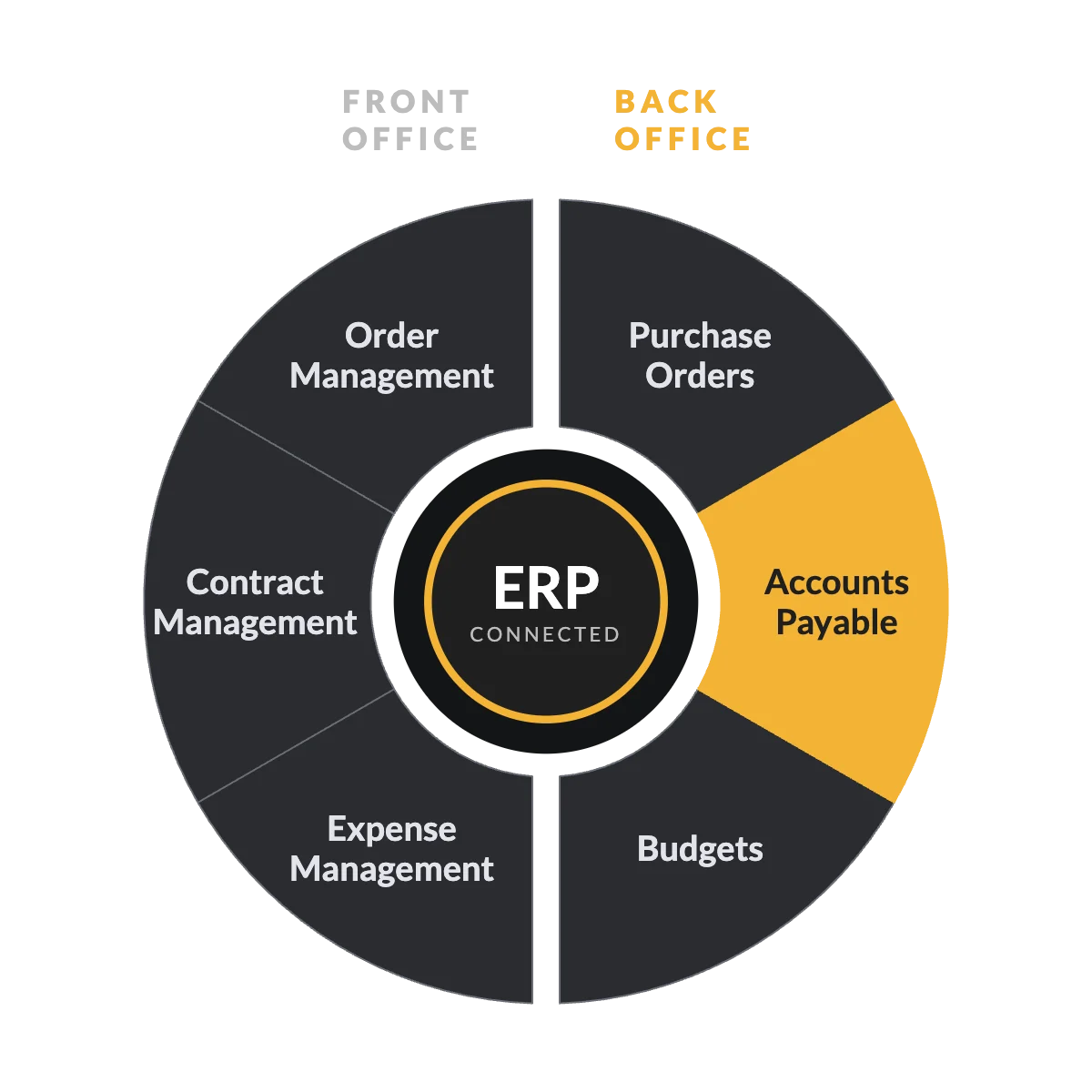
Accounts Payable sits alongside Purchase Orders, Budgets, Contract Management, Order Management and Expense Management* on the FinOps platform. The PO behind an invoice, the contract behind a price and the budget behind an approval are all one click away.
Software that handles the repetitive part of paying suppliers: reading invoices, coding them, matching them to orders and receipts, and routing them for approval. Your team works on the exceptions.
Does it support three-way matching?
Yes. Two-way against the purchase order, or three-way against the order and the goods receipt, on itemised or blanket orders. Photos of goods received can be attached. Our guide to invoice matching, tolerances and exceptions goes further.
Does it reconcile supplier statements?
Yes. Statements are matched automatically against the invoices for the period, with mismatches and missing invoices highlighted.
How much volume can it handle?
From 1,000 to tens of thousands of documents a month on the same platform.
How accurate is the data extraction?
Built on six years of dedicated R&D, reading invoices down to line level in PDF, Excel, Word, CSV and image formats.
How is Accounts Payable priced?
No per-user licence for Accounts Payable, so adding approvers doesn’t add cost. Pricing is based on your volume.
How secure is it?
ISO 27001 certified and hosted on AWS, with document access controls and a full audit log.
Which finance systems does it connect to?
Leading ERPs including Sage Intacct, NetSuite and Microsoft Dynamics.
How long does implementation take?
A typical implementation is 8 to 10 weeks, scoped before it is priced. It starts with a discovery call, where we work out what you need and how it will be set up, and our team stays alongside you throughout.
Does it support e-invoicing?
Yes. E-invoicing is becoming mandatory in more countries, most of them on the Peppol network, with the rules for each set by its Peppol Authority. Some markets, such as Australia and New Zealand, already exchange invoices this way, and others, including the UK from April 2029, have dates set. E-invoicing changes how invoices arrive, not how they’re checked and approved: whichever way an invoice comes in, it is matched, coded and approved under the same rules. Read our guide to UK e-invoicing →
Can I use it alongside Webexpenses expense management?
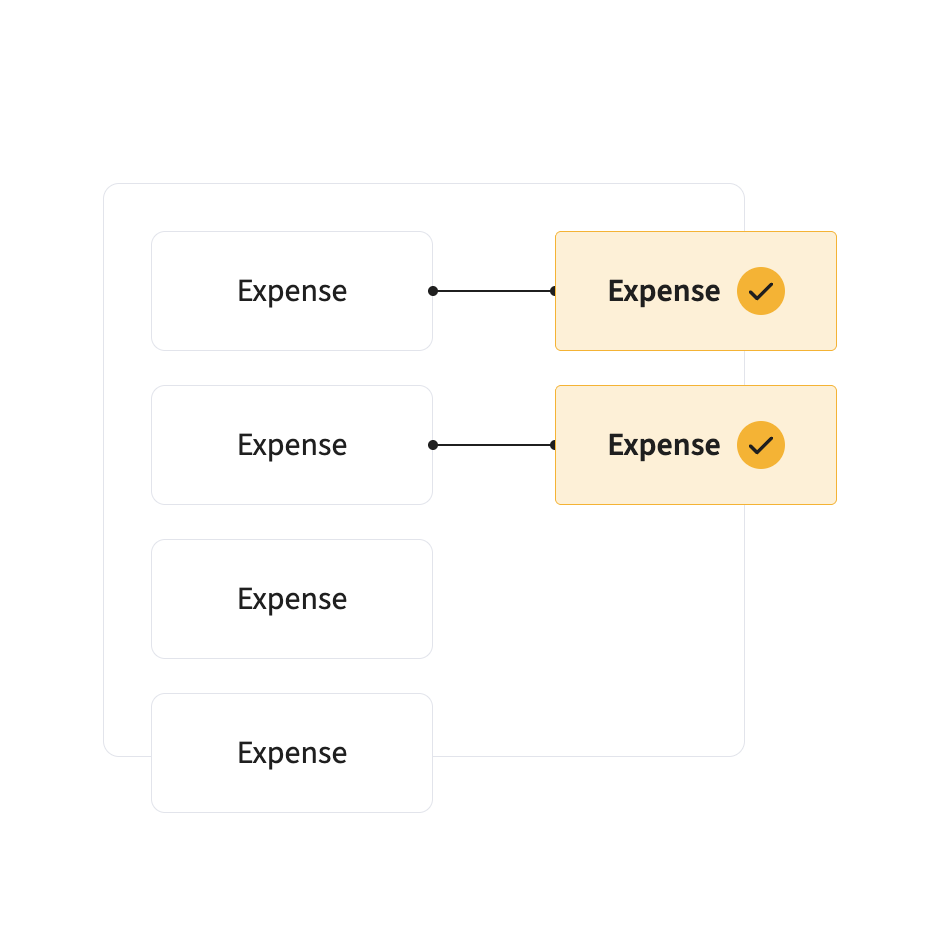
Yes. Expense Management is available today as a standalone product, with full integration coming soon.
See it on your own invoices
Bring a real month end. We’ll show you where the time goes, and what changes when it stops going there.